Write your awesome label here.
Psychological Safety is more than just a supportive environment. Learn how integrating Psychological Safety into your workplace can increase innovation, productivity, and retention, too.
BUILDING PSYCHOLOGICALLY SAFE WORK ENVIRONMENTS
Research-based strategies to take your company from toxic to truly safe.
Write your awesome label here.
EARN CONTINUING EDUCATION UNITS (CEUS)
MEET YOUR INSTRUCTORS
ABOUT US
MORALIS MACHINA
In a nutshell?
We're behavioral scientists on a mission to make corporate culture less toxic and more top-notch.
Come find out how to make real waves in the workplace.
We're behavioral scientists on a mission to make corporate culture less toxic and more top-notch.
Come find out how to make real waves in the workplace.
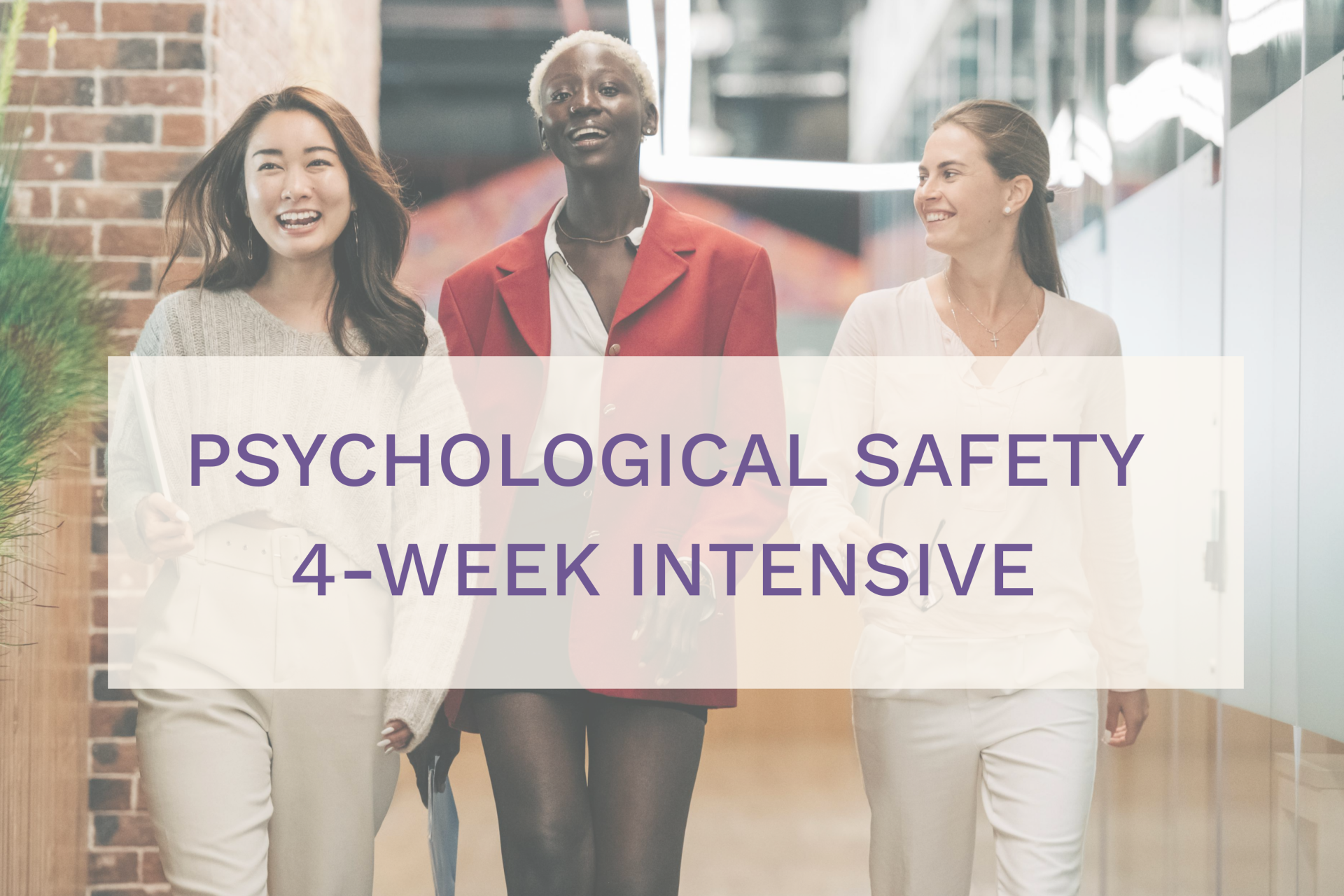
BUILDING PSYCHOLOGICALLY SAFE WORK ENVIRONMENTS
4 ASSESSMENT TECHNIQUES
There are a variety of tools we can use to understand psychological safety in our organizations. We'll teach you four, and provide you with scoring templates to make it as painless as possible.
STRATEGIES TO INCREASE PSYCHOLOGICAL SAFETY
From antecedent interventions and metacontingencies, to reinforcement and job performance, we tackle how you can move toward a more psychologically safe workplace.
DECREASE INCOMPATIBLE BEHAVIORS
When we are working toward relearning new ways of working, we need ethical ways to decrease behaviors that move us away from psychological safety.
APPLY IT TO REAL WORLD EXAMPLES
Generalize what you've learned through the course, and apply it to a real case.
COURSE REVIEWS
This was an excellent course to help me fully understand psychological safety and how to better understand it with applicable tools to use in my current job and how to navigate the field moving forward.
- H. F.
Extremely helpful and eye-opening. I was able to put a name and operational definition to what I have experienced in recent months in this field!
- E. K.
COURSE CONTENTS
FAQ
Who is this course for?
It’s designed for behavior analysts interested in supervision, OBM, leadership, and workplace culture, especially those who want to apply behavioral strategies to employee experience.
How many CEUs will I get?
This four-week intensive will be worth 5 CEUs total; 2 Supervision, and 2 Ethics.
How do I know if it's a good fit for me?
If you have a basic understanding of behavioral phenomena (like reinforcement, punishment, schedules or reinforcement, etc.) you should be able to keep up!
This is an intensive course, which means we will go through content quickly; but we provide lots of resources, readings, templates and even terms and definitions so that you can get the most possible out of this!
This is an intensive course, which means we will go through content quickly; but we provide lots of resources, readings, templates and even terms and definitions so that you can get the most possible out of this!
Is this live or asynchronous?
This is for the LIVE version of the course. Once the live version is complete, it will be converted to an asynchronous version.
How do the live classes work?
You log into your account on this website, open the course, and click the meeting at the scheduled time. It will run through the website with no additional software installation needed - it's that easy!
What will I learn in a psychological safety CEU course for behavior analysts?
This course explores psychological safety through a behavior analytic lens. You’ll examine how to assess it in a workplace, build conditions that help employees speak up, and respond to behavior that undermines safety. The final session applies those ideas to an organizational case.
How does psychological safety relate to Organizational Behavior Management (OBM)?
Psychological safety affects whether employees ask for help, share concerns, offer ideas, and acknowledge mistakes. This course connects those workplace behaviors to OBM concepts such as assessment, feedback, modeling, and behavior change.
Does this course include a real-world application of psychological safety strategies?
Yes. The final session follows an organizational case involving employee turnover and low engagement. Learners consider assessment findings, select behaviors to increase or decrease, discuss possible interventions, and identify ways to measure progress.
What is psychological safety in the workplace?
Psychological safety is the shared belief that people can ask questions, raise concerns, share ideas, and admit mistakes without fear of being embarrassed or punished. In this course, you’ll explore what that looks like in everyday workplace interactions and how behavior analysts can assess and strengthen it.