
Dialing in What You Actually Want

"Dialing It In"
Work-life balance means how hard is it to pick up your kids from school, or be available for their 3:00 pm Little League game. It’s also how often you can travel for pleasure, and whether or not traveling for business is a fun change of pace or a total drag. It’s the average amount of stress you encounter on a day-to-day basis. Taking late night calls. Mandatory overtime. Difficult colleagues or clients.
The list of considerations can be really long, but here are categories few to consider:
-
Wages and benefits
-
Stress levels
-
Autonomy
-
Ability to "leave it at the door"
-
Novelty
-
Status
-
Flexbility
-
Influence
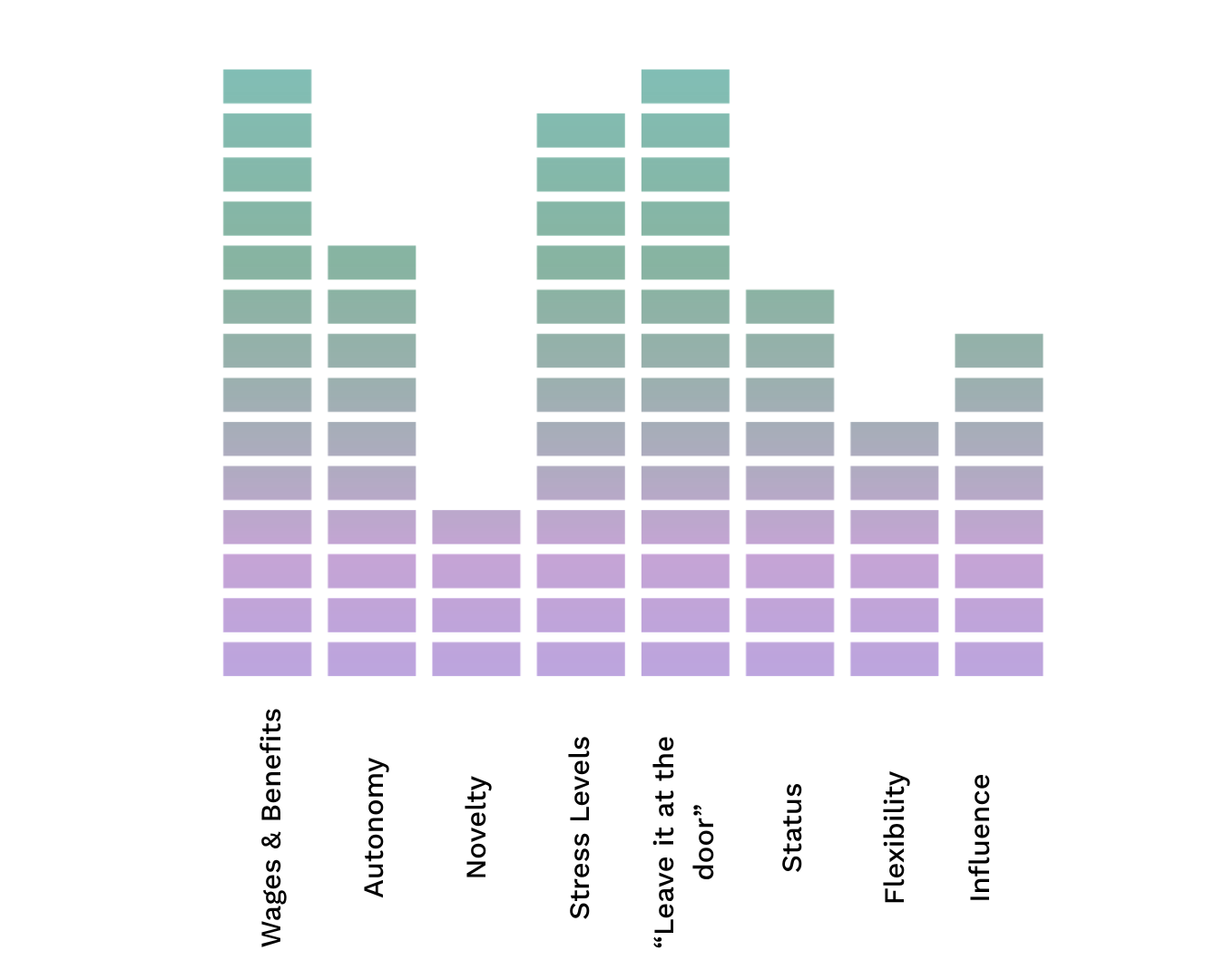
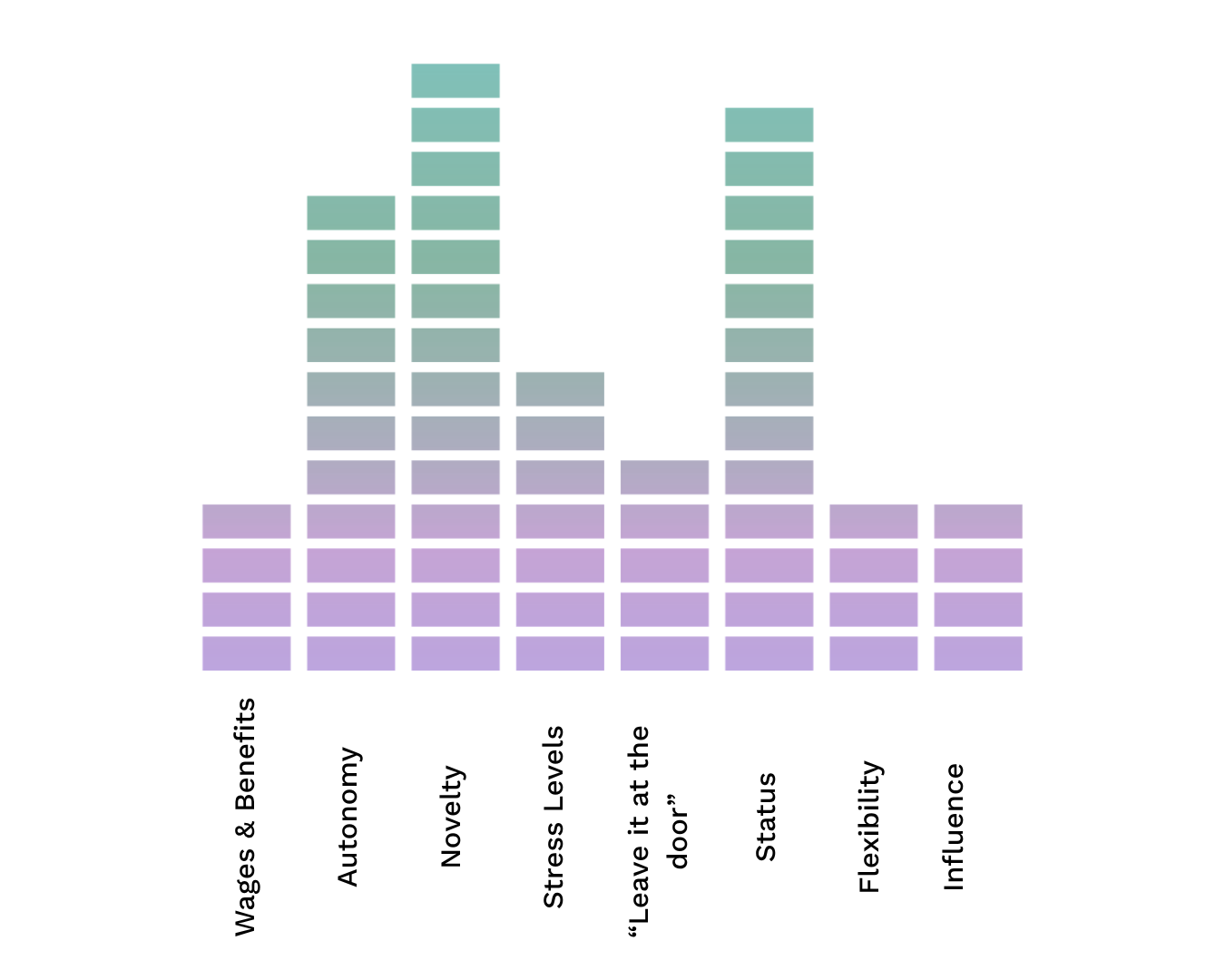
Imagine each of those things as a dial on a stereo; you can turn each one up, or down, but we need to keep the music somewhat equalized. Maybe what you actually want looks like this:
When to Adjust the Dial?
Something I’ve seen play out…
A BCBA is desperate to get out of clinical work. They don’t take the time to inventory their professional values (the presets) and instead blast out hundreds of applications hoping someone bites. When they do, they jump at the first opportunity that comes along, and 6 to 12 months later… they’re feeling stuck again. Another unsustainable position, and the cycle repeats.
We should aim to strike a balance between taking a life boat to somewhere we don’t want to go, and having standards so high, no job will ever meet them.
Your presets are your guide, but being able and willing to turn individual things up and down, within reason, helps us with psychological flexibility (That’s ACT again! And if you read Article 1, you may be seeing a bit of a pattern here.).
The Salary Dial
Let’s dive into one of those dials specifically: salary. You probably
have an idea on how much money you need to survive. Mortgage, food, car
insurance… all those things add up. And, at minimum, your job needs to enable
you to financially support yourself. Would it be nice to have extra?
Absolutely. Who doesn’t have a Pinterest board full of vacation ideas they’d
love to stash some cash away toward.
So the question becomes, what would you compromise on to have your wages
be where you need?
Would you take lower wages if it meant more flexibility in your working
hours? Would you accept higher daily stress levels if it meant the wages made
it possible to pay off your student loans faster, to pay for that expensive SAT
tutor for your college-bound kiddo?
The further you push one dial up, the more likely you are to need to make concessions across other dials in your preset.
This can sound pretty conceptual, so let’s see how that can play out in practice.
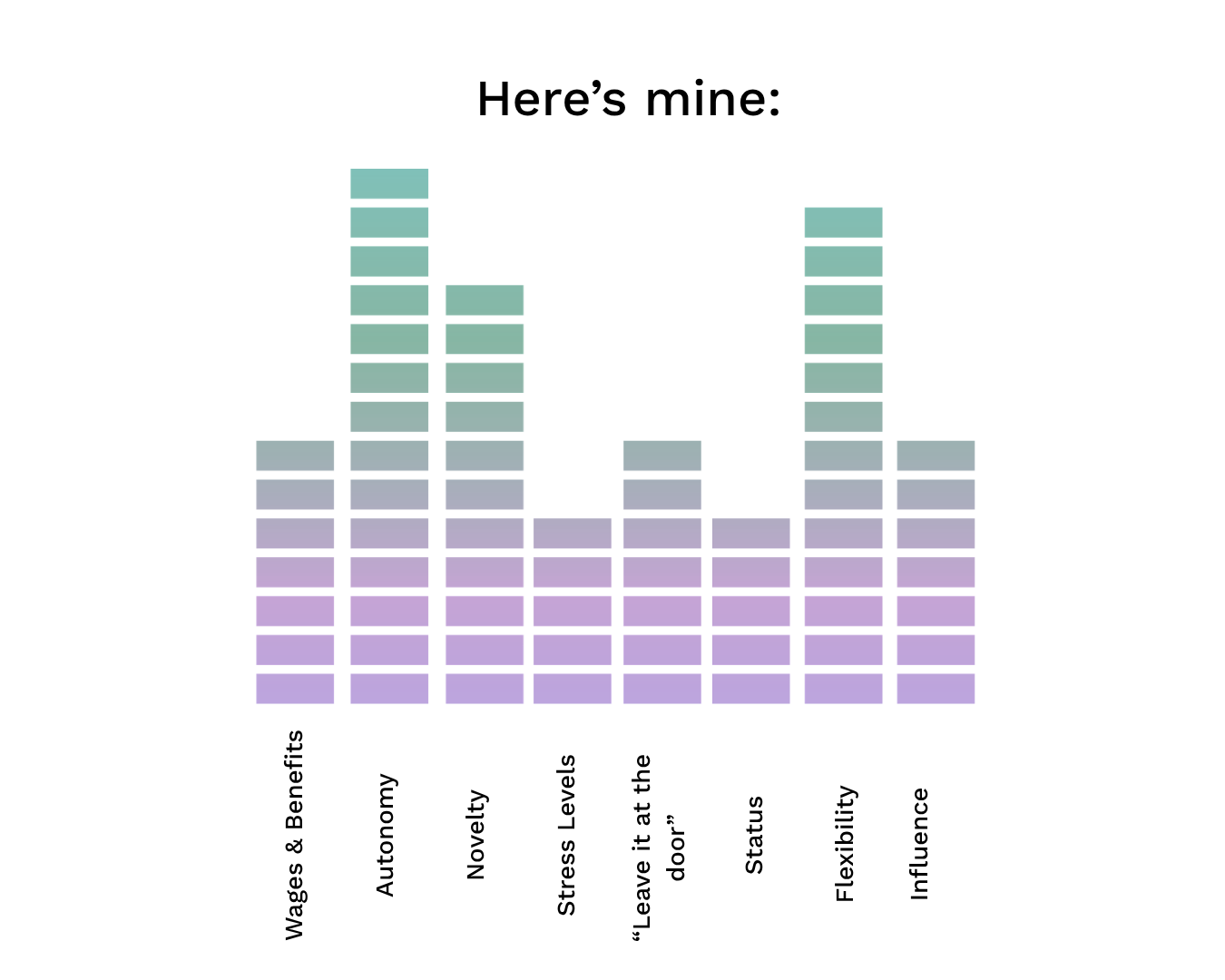
My Dials
Even though everyone’s presets are going to look different, I’ll share a
bit about mine. Not because you should copy-paste mine, but to share a bit
about how I’ve been able to shift my dials over time to get closer to that “equalized”
state.
Despite being in a single income household, money is definitely not my
highest dial. As an entrepreneur, I haven’t given myself a raise in the entire
5 and a half years I’ve owned my business. Could I have? Sure. But, for me, it
made more sense to reinvest that money back into the business.
My autonomy and flexibility dials are sky high though. Those probably
led me to being an entrepreneur. I like being empowered to make decisions. Even
if I make a mistake, if I didn’t have all the information, or if something didn’t
work out, I know my thought process on why we did something.
The biggest shift in leaving clinical work is actually the interplay
between “leave it at the door” and stress levels. I’d like to think I’m a
pretty resilient person. I won’t say I always deal with stress well, but I can
reset emotionally, and keep moving forward. I’m willing to accept higher day-to-day
stress levels when I can also “shut my brain off” and leave work at work (even
though I work from home… but you know what I mean). I found clinical work to be
highly stressful day-to-day, but I’d also lay awake at night worry if that client
would elope to the river again. Or if that family was going to have enough food
to feed their family. Or if that mom with breast cancer was going to feel up to
going to that IEP meeting that was going to be hell, even on the best day.
The Dials for Now, And the Dials for Later
Like we said, no job is perfect, but some jobs are better than others.
As our skills grow, and our life circumstances change, our dials can change,
too. They’re flexible for a reason! As your BCBA career goals change, your
presets will too. And, you may need to make more compromises at first and shape
those presets throughout your career to get closer to that “equalized”
position.
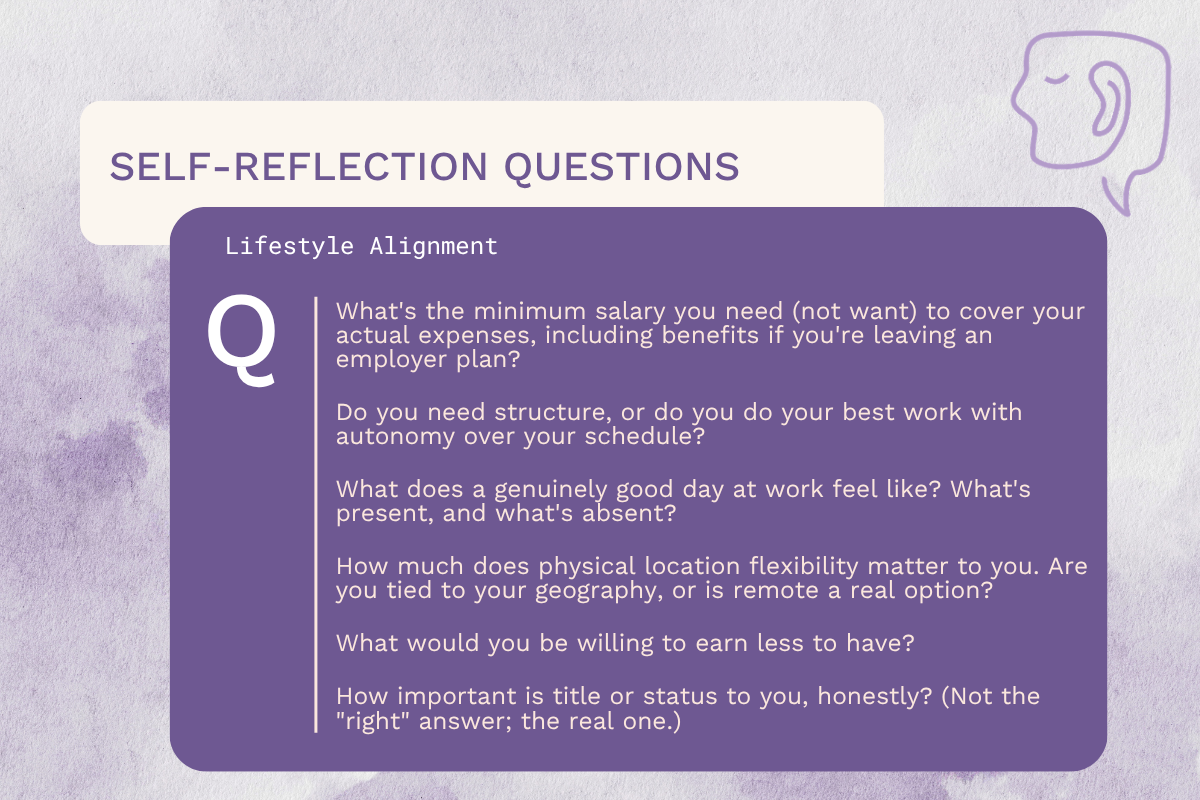
So, as you figure out the dials for your professional values and what
you want from your non-traditional BCBA job, here are some questions you should
be able to answer:
So, where does that leave us?
When we think about our dials, we are considering how important our professional values are to us, but in a way that’s flexible, dynamic, and can be updated as we grow and change.
If you want to meet behavior analysts like you, or want support exploring these concepts more, check out OBM Jumpstart, or send us a note. We're here to help.
GET IN TOUCH
-
@ABA_in_the_wild
-
linkedin.com/company/moralis-machina/
-
info@moralismachina.com