Write your awesome label here.
This course introduces the fundamentals of user experience and user interface design while exploring how BCBAs can analyze user behavior, improve digital systems, and transition into UI/UX careers.
DESIGNING BETTER EXPERIENCES.
Digital products shape how people access services, complete tasks, and make decisions.
User Experience (UX) and User Interface (UI) design focus on understanding how people interact with digital systems and improving those experiences through research, behavioral insight, and thoughtful design.
In this course, you'll explore how UI/UX professionals study user behavior, identify barriers that prevent successful task completion, and design digital environments that support better outcomes.
$25
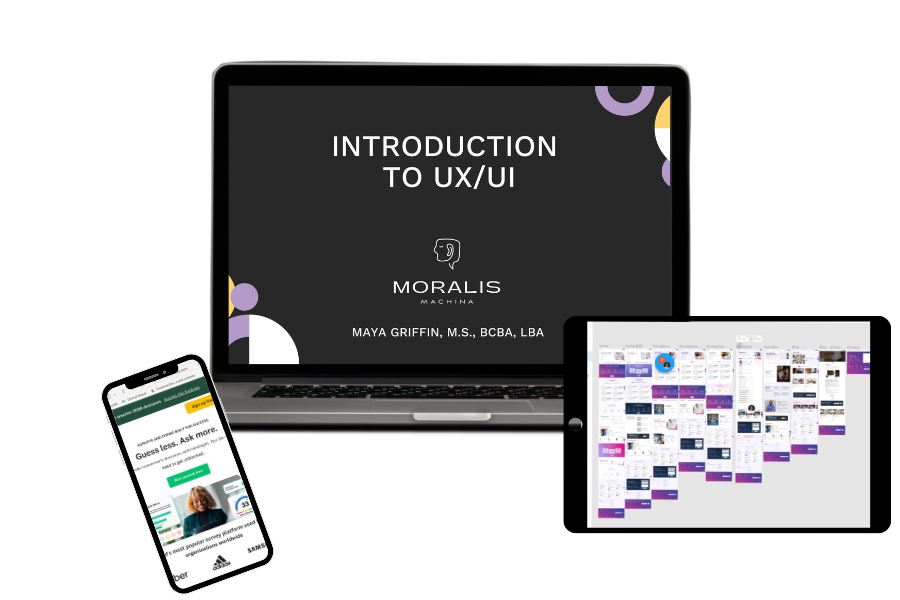
LIVE SESSION: April 23rd, 2026
BSA OF THE GUEST EXPERIENCE
Some of the discoveries you'll make in this course
Explain the Difference Between UI and UX
Learn how user experience and user interface design work together to shape how people interact with digital products.
Identify UI/UX Career Paths
Discover common roles such as UX researcher, product designer, and UX/UI designer, along with typical responsibilities.
Analyze How Users Interact Technology
Explore how UX professionals observe user behavior, identify friction points, and analyze patterns that influence task succe
Apply a Behavioral Diagnostic Framework
See how behavioral observation, data analysis, and environment design translate into UX research and product design careers.
EARN CONTINUING EDUCATION UNITS (CEUS)
WHY ATTEND?
MEET YOUR INSTRUCTOR
COURSE REVIEWS
COMING SOON
ABOUT US
MORALIS MACHINA
COURSE CONTENTS
FAQ
How many CEUs will I get?
If you're BACB certified, completing the course will get you 1.5 Learning CEUs!
Who is this course for?
This course is for behavior analysts interested in exploring UI/UX design and learning how behavioral science can be applied to improve digital products and user experiences.
Are there any pre-requisite skills?
A basic understanding of behavioral phenomena (e.g., reinforcement, punishment and extinction) and a desire to engage is all you need for this course.
What if I'm not certified through the BACB?
That's okay! In lieu of CEUs, you'll get a certificate of completion.