Write your awesome label here.
BSA is an approach that equips you with the tools to view organizations as interconnected systems, so you can optimize processes, and drive meaningful, long-term change.
INTRO TO BSA
In today’s complex organizational environments, behavior analysts need more than just individual interventions—they need systems thinking.
BSA is unique as a sub-discipline of Organizational Behavior Management with great job opportunities in consulting for those looking to pivot.
BSA is unique as a sub-discipline of Organizational Behavior Management with great job opportunities in consulting for those looking to pivot.
$25
Write your awesome label here.
EARN CONTINUING EDUCATION CREDITS (CEUS)
WHY ATTEND?
ABOUT US
MORALIS MACHINA
INTRO TO BSA
Here are some of the discoveries you'll make during the course:
SYSTEMS THINKING
Discover this holistic way of thinking that allows you to view problems differently.
ROOT CAUSE ANALYSIS
Ready for some good news? You have a lot of skills necessary already to execute this critical BSA activity!
A DAY IN THE LIFE
Interested in what a BCBA who does BSA spends their time doing? We'll tell you about the projects Zendicoded's BCBAs are currently directing.
PROCESS ANALYSIS
There are 8 common process analysis tasks. How many can you do independently?
INFO FOR JOB SEEKERS
We've got common job titles and average salary ranges
RECOMMENDED CROSS-TRAININGS
From Lean Six Sigma, to CPIS, and beyond, we've got a great list of recommendations.
WATCH 6 MINUTES FREE
Write your awesome label here.
COURSE OUTLINE
FAQ
How long is the course?
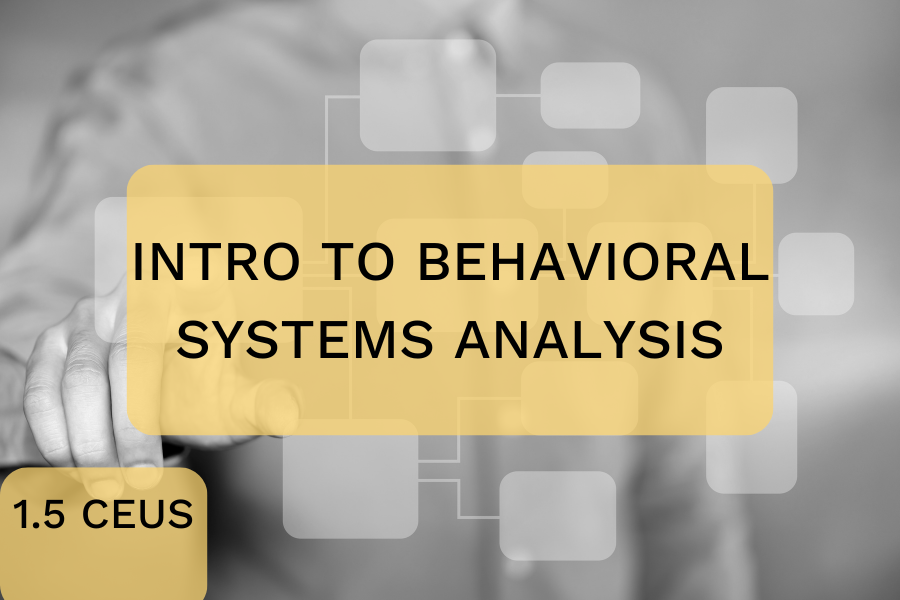
It's 75 minutes, just long enough to get those 1.5 CEUs!
How many CEUs will I get?
1.5 Learning CEUs
Who is this course for?
This course is for behavior analysts who are interested in learning more about how to apply their skill set in organizational settings, are in a leadership position, or own their own business. If you're interested in how to make a business run smoother - it may be a great fit for you!
Are there any pre-requisite skills?
Having a solid understanding of basic behavioral principles is necessary, but this is an introductory course! We make the content as accessible as possible, so you can decide if it's an area you want to get more technical with over time! We provide lots of resources to help fill any gaps you have!
What if I'm not certified through the BACB?
That's okay! We have lots of participants who aren't BACB certified. If you're not certified, you'll receive a certificate of completion in lieu of CEUs. We also offer student discounts! Reach out to us if this is you.
What is Behavioral Systems Analysis (BSA)?
Behavioral Systems Analysis examines how the people, processes, and other parts of an organization work together to produce results. This introductory course shows behavior analysts how to look beyond individual performance and begin assessing the larger system.
How is Behavioral Systems Analysis related to Organizational Behavior Management (OBM)?
BSA is a subspecialty within OBM. It applies behavior analytic thinking to interconnected organizational processes, helping practitioners identify where a system may be affecting performance.
Can BCBAs use Behavioral Systems Analysis in clinical settings?
Yes. A BCBA might use systems thinking to examine a training process, a workflow, or barriers that affect service delivery across a clinical organization. The course introduces this broader way of assessing problems.
What will I learn in an introductory BSA course?
You’ll be introduced to the core activities of BSA: identifying components of a system, analyzing breakdowns or inefficiencies, and selecting ways to improve processes. The course also covers systems thinking, root cause analysis, and examples of BSA work.
Do I need experience in OBM to take this course?
No prior BSA experience is assumed. The course is designed as an introduction for behavior analysts who want to explore systems level work, including those considering a move into OBM.
What kinds of careers use Behavioral Systems Analysis skills?
BSA skills can be relevant to process improvement and consulting roles across industries such as healthcare, technology, manufacturing, and logistics. The course explores related job titles and what this work can look like for behavior analysts.