Write your awesome label here.
Explore how ethical principles, professional competence, and evidence-based practices guide behavior analysts working in animal training and behavior treatment.
ETHICAL CARE FOR ALL SPECIES.
Ethical practice is essential whenever behavior change procedures are applied, and working with animals introduces responsibilities that extend beyond traditional clinical settings. This course explores how the foundational principles of the BACB Ethics Code apply to animal training and behavior treatment, including the obligation to promote welfare, prevent harm, act with integrity, and practice within professional boundaries.
You’ll explore how ethical standards guide real decisions in animal behavior practice, from choosing humane training methods to recognizing the limits of your competence. The course addresses animal welfare, caregiver collaboration, harmful practices, and the responsibility to use accurate, science-based information.
You’ll explore how ethical standards guide real decisions in animal behavior practice, from choosing humane training methods to recognizing the limits of your competence. The course addresses animal welfare, caregiver collaboration, harmful practices, and the responsibility to use accurate, science-based information.
$25
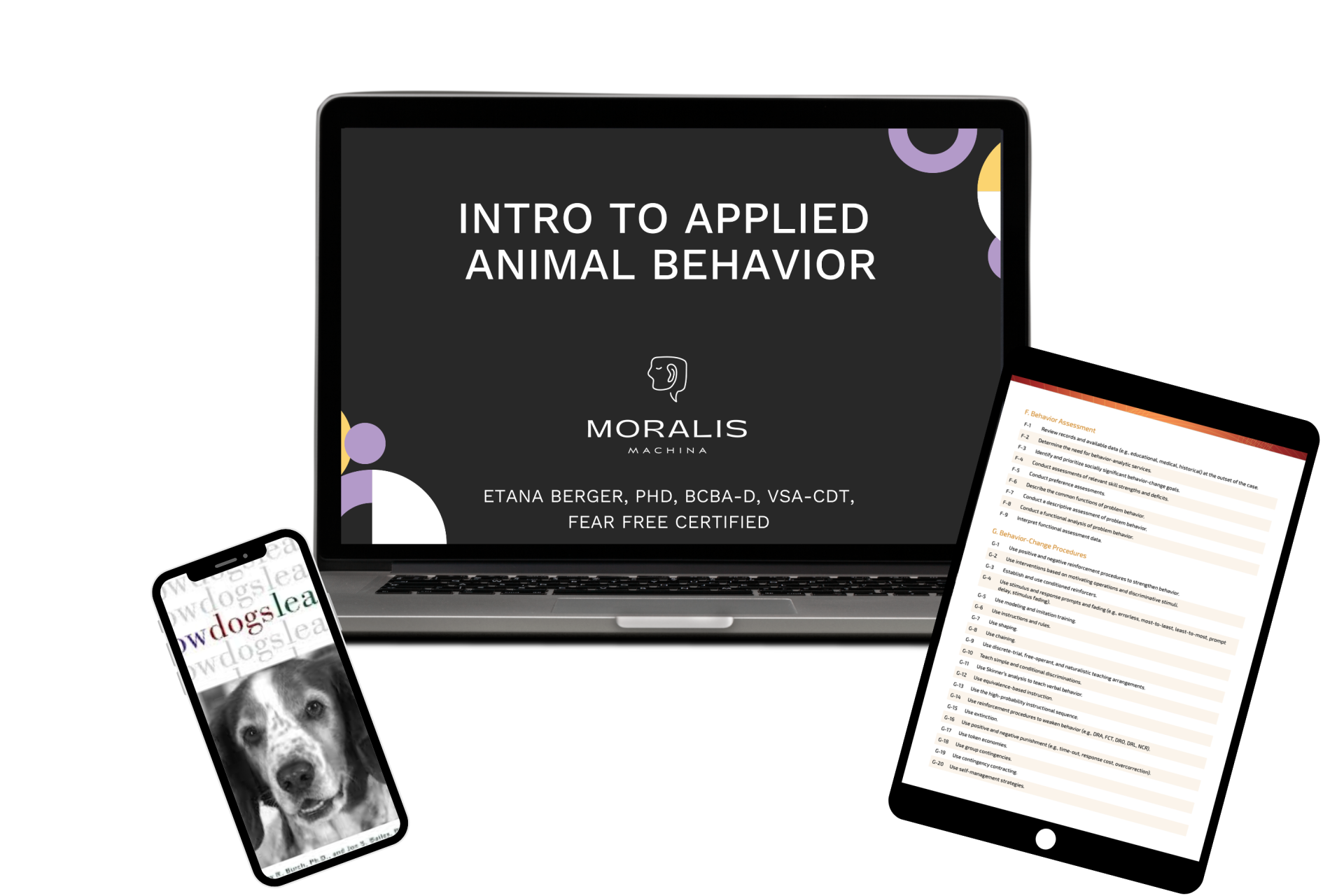
LIVE SESSION: October 8th, 2026
INTRODUCTION TO APPLIED ANIMAL BEHAVIOR
SOME OF THE DISCOVERIES YOU WILL MAKE IN THIS COURSE
Apply Ethics Across Species
Connect the foundational principles of the BACB Ethics Code to animal training and behavior treatment.
Evaluate Competency
Learn how to assess whether your knowledge, experience, and resources prepare you to address an animal behavior concern.
Recognize
Ethical Concerns
Identify harmful practices, misinformation, and other ethical concerns that can affect animal welfare.
Expand Your Ethical Resources
Explore additional professional standards and resources that support ethical, evidence-based animal behavior practice
EARN CONTINUING EDUCATION UNITS (CEUS)
WHY ATTEND?
MEET YOUR INSTRUCTOR
ABOUT US
MORALIS MACHINA
COURSE CONTENTS
FAQ
How many CEUs will I get?
If you're BACB certified, completing the course will get you 1.5 Learning CEUs!
Who is this course for?
This course is designed for behavior analysts, animal trainers, and other professionals interested in the ethical application of behavior science within animal behavior. It is especially relevant for BCBAs who currently work with animals or are interested in expanding their knowledge of animal training, welfare, and ethical practice.
Are there any pre-requisite skills?
A basic understanding of behavioral phenomena (e.g., reinforcement, punishment and extinction) and a desire to engage is all you need for this course.
What if I'm not certified through the BACB?
That's okay! In lieu of CEUs, you'll get a certificate of completion.