What did the author of Lés Miserables and The Hunchback of Notre Dame know about Organizational Change Management (OCM)? Especially when he was born in 1802.
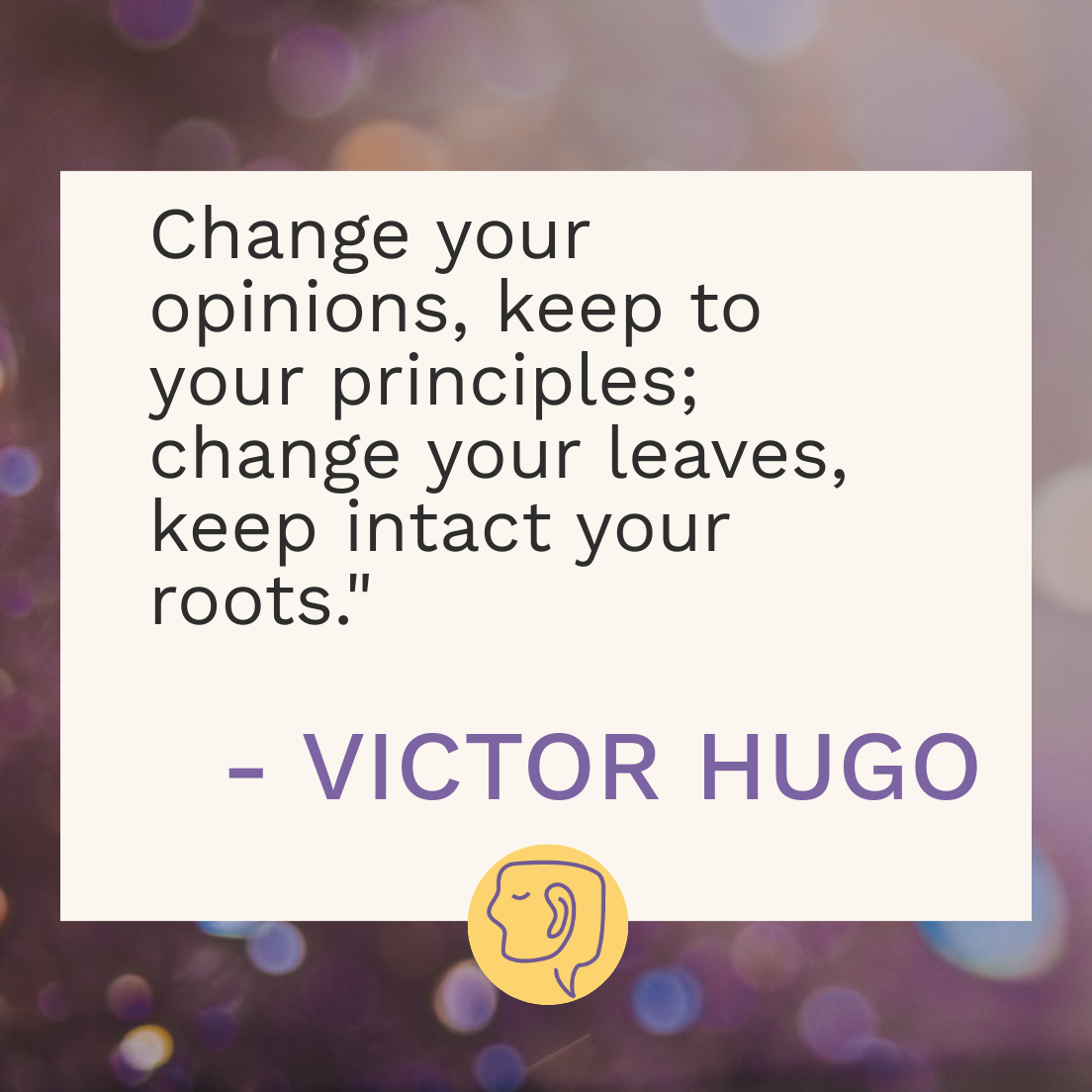
Well, let's take a look at this quote:
CHANGE YOUR OPINIONS, KEEP TO YOUR PRINCIPLES; CHANGE YOUR LEAVES, KEEP INTACT YOUR ROOTS.
- VICTOR HUGO
We could say it has aged well, unlike a lot of things.
No matter your role in an organization during a period of change, you're being asked to change your opinion.
Your entry level employees? They think it's easier to do it the old way than to embrace the new way.
As a business owner, you need to see that the future could look different than how you originally planned for it AND that the new way could be better.
You're an behavioral analyst consulting and helping guide a change initiative. You may come in with your standard box of tricks and realize they aren't going to be effective in the current context, with this organization's culture.
Changing your organization means changing opinions.
You can't throw a rock without hitting another thought leader with an opinion on this. There are lots of great ideas out there, but based on what we know from decades of science in behavioral research is that almost every effective technique to change opinions can be sorted into one of the following "buckets":
1. MAKING DATA-BASED DECISIONS
2. TAPPING INTO MOTIVATIONS
It's in an organization's best interest to make decisions based on data. Those data may be from wildly different sources and look very different. Market pressures, employee satisfaction surveys, annual turn over rates... any of these could trigger organizational change.
BUT, if you don't have the right data, you might not make the right decision. Having good, holistic KPIs in a business is paramount. Good data = better decisions. Good data = better changed opinions.
WIIFM? (aka What's in it for me?).
I personally don't like the transactional vibe that gives. I prefer things how do we "reach" people, or meeting people where they are.
Regardless of the terminology you use, I promise that
pizza parties aren't the answer. In fact, did you know that research has found that managers can only predict the most preferred incentive for an employee in 55% of opportunities? (Read the abstract of the initial study
here; but it's been replicated multiple times).
We aren't good at this because every employee is different. They come from different cultures, different generations, different lived experiences So, no. Personas probably aren't going to cut it either!
Behavioral scientists have more than a dozen strategies at close recall to help create motivation for people, whether they're a "critical friend", active resister, or committed to the "old school", and everything in between.
Some people will me motivated by data, others by their personal values, others by avoiding negative outcomes. And a great Change Management Plan creates a seamless application of these to capture as many folx as possible.
Maybe your organizational change is small. Maybe it's a full fledged transformation and complete organizational redesign.
Regardless of the size of the change, responsible change management means ensuring that we are aligning to the organization's mission, vision and values.
That doesn't just mean that we check the outcome. We also need to align:
- The Change Management Plan
- Feedback & Accountability measures
- Key Performance Indicators (leading AND lagging)
- The Strategies we use to get us there
An astute reader may realize that this is a little bit of a "snake eats its own tail" situation. By keeping your principles and aligning your organizational change to your organization's values you may just capture the motivations of the people in the organization - if their values are the same as the organization's.
TAKE AWAYS
Let the data guide your decisions, or get the data you need so you can.
Align your strategy to the vision of the organization.
Capture the motivations of your team and remember they're individuals.
paint the picture for your team so they can see the future is bright.
*ASYNCHRONOUS VERSION COMING SOON*