
Sep 10
/
Dr. Kristyn Peterson, PhD, BCBA, LBA, LSSMBB
OBM Works Outside the ABA Clinic. Here Are 20+ Industries That Prove It.
One of the most common things we hear from BCBAs thinking about OBM is some version of: "I get that theoretically ABA works in organizations. I just don't know if it actually works in the real world."
It does. We know because the people who teach our courses have done it.
Moralis Machina is a workforce development company, not a consulting firm. But our collaborators are working practitioners who have spent careers applying behavioral science in real organizations - not just presenting about it at conferences. Between them, they have worked in more than 20 industries. Here's a look at where, and what it actually looked like.
BEHAVIORAL SCIENCE DOESN'T CARE ABOUT INDUSTRY.
Reinforcement contingencies work the same way in a call center as they do in a clinic. Performance problems in a bank look structurally similar to performance problems in a behavioral health organization. Change is hard everywhere, for the same reasons.
What changes between industries is the language, the stakeholders, and the specific systems you're working in. The science doesn't change. Once you've learned to apply behavioral science organizationally, the industry is mostly a translation problem.
WHERE OUR INSTRUCTORS HAVE TAKEN OBM
Animal Shelters
Construction
Gym & Fitness
IT
Professional Services
Arts & Cultural Organizations
Consulting
Healthcare Systems
Learning & Development
Retail
Behavioral Health
Energy & Fuel Retail
Higher Education
Manufacturing
SaaS
Call Centers
Grocery
Human Resources
Non-profits
Tech
Below are three examples of what OBM looks like in practice. We chose these one specifically because they're the ones that tend to raise the most eyebrows.
BANKING
A little context...
Highly regulated industries are interesting OBM territory for a specific reason: the expectations are usually crystal clear, which means when behavior still isn't happening, you can't blame ambiguity. Something else is going on.
Where OBM Came In:
Banks have a surprising number of audits, and it's not just money audits. We worked with a bank who had failed an important audit (for "asset management", specifically. If you're interested Google it, but it's not really the point of the story). These audits have clear expectations and requirements up front. There are no surprises. But, even though this bank knew exactly what was expected, they'd failed the audit twice. Due to this failure, they were fined money for every day that the issues weren't resolved. Clear antecedents, clear (and honestly pretty gnarly) consequences. And yet, the right behaviors weren't happening. Why? Because they didn't have the right systems or the right environment to get those behaviors to occur. That's what we worked on with them, and it turned into a 3+ year engagement based on the success of that initial project where we righted the ship on the audit.

*This project was not at Wells Fargo. We just liked the photo. But... we aren't saying we've never worked with them.
CONSULTING
A little context...
Consulting firms sell performance. Which makes it a little awkward when their own internal performance is the problem…
Where OBM comes in:
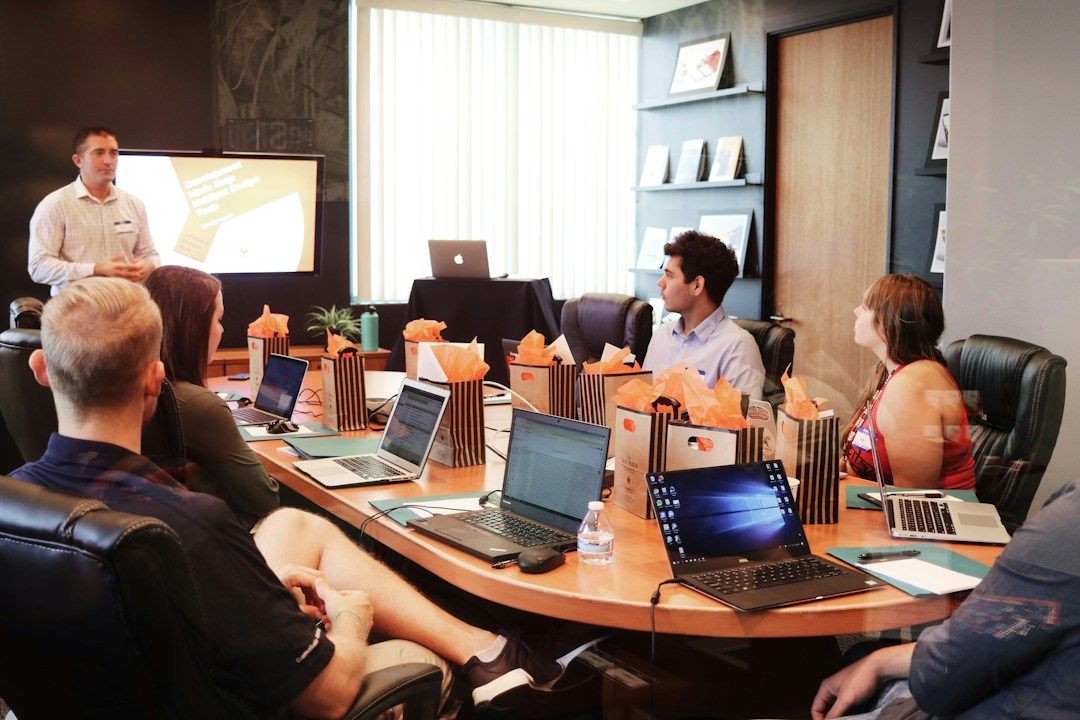
It's kind of meta, but you can consult with consultants. In fact, this project (which was part of Kristyn's “big girl”, aka full-time job) won her and the team she led the OBM Network's Outstanding Applied OBM Intervention Award in 2024. We focused on increasing "critical work behaviors" of people in the project management office at a management consulting firm. Project managers are often the lifeblood of consulting. Managing tasks, schedule, scope and budget for multiple client engagements simultaneously is table stakes for most consulting agencies, so failing to do it well can have significant negative financial consequences to the consulting agency, and leave their customers with a sub-par product or service. Instead, this consulting agency increased their revenue by $7,277 per month based on these improvements; a substantial gain for their size and average monthly revenue.

Real life footage of us providing a consulting engagement.
Jk. We don't know him.
GAS STATIONS
A little bit of context...
Multi-unit retail operations live and die by their ability to scale consistently. When something breaks in the system, it doesn't just affect one location - it blocks growth entirely.
Where OBM came in:
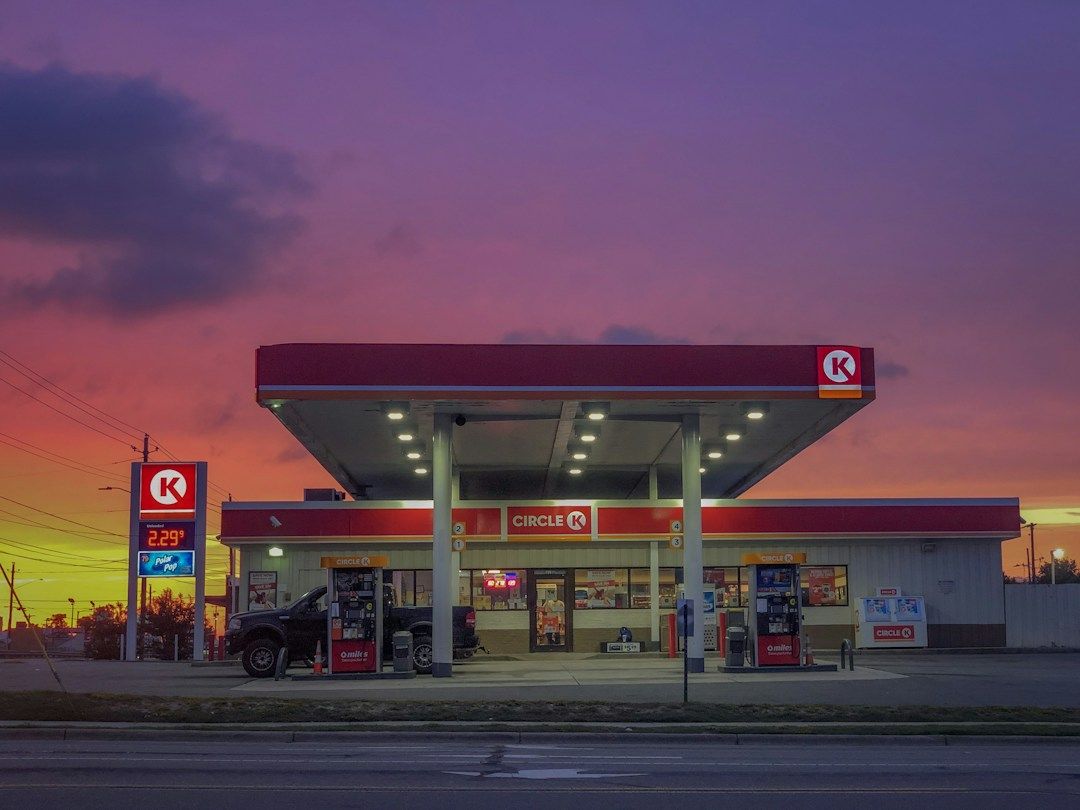
One of our favorite projects was a gas station chain who came to us saying "We want to open more locations, but we keep losing giant pieces of equipment". Think... $60,000 industrial deep fryers and enormous drink fridges. We knew that these things weren't growing legs and running for the hills from the warehouses. With behavioral Systems Analysis (BSA), 3 GoPros, and a really gnarly Excel spreadsheet masquerading as an inventory system, we helped them sort out their warehouse woes so they had the infrastructure to confidently open 32 new locations in 12 months.

Also... not the customer. Noticing a trend? The truth is many of us are contractually prevented from naming customers, so we just never do it.
P.S... This project was the case study for one of our BSA CEUs entitled, "How BSA Can Help BCBAs Make a Macro-Level Impact" if you want to learn more about the mysterious case of the missing deep fryers.
BCBA WHO'S THINKING ABOUT WHAT'S NEXT?
The industries above are not a credential list. They're context.
They mean that when you learn OBM from Moralis Machina, the examples are real, the edge cases are real, and the problems you'll encounter in your own work have probably already shown up in someone's engagement. That's what practitioner-built content actually means.
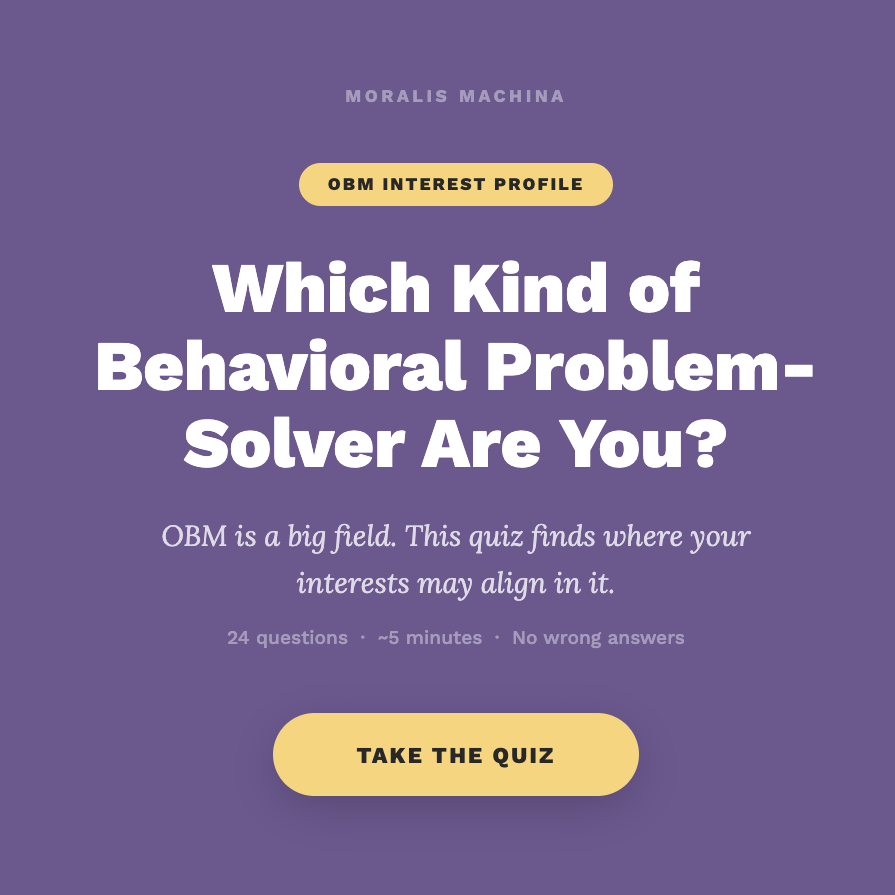
Not sure where your skills could take you? Start with our free OBM Interest Profile. It takes less than 10 minutes and points you toward the subspecialties that fit your background and interests best.
GET IN TOUCH
-
@ABA_in_the_wild
-
linkedin.com/company/moralis-machina/
-
info@moralismachina.com
ABA IN THE WILD NEWSLETTER
Get monthly updates on live events, job seeker tips, reading recommendations, and more.
Thank you!
Copyright © 2026